
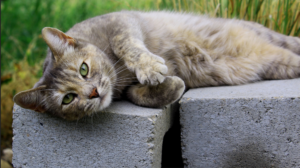
“Numerous videos of excited cat owners presenting their pets with concrete slabs, even taking trips to the hardware store to pick up some pavers…..”
“Numerous videos of excited cat owners presenting their pets with concrete slabs, even taking trips to the hardware store to pick up some pavers…..”

“Pepper the cat is at it again. After his hunting skills helped virologists identify the first jeilongvirus in the United States, the virus-hunting feline has detected a new strain orthoreovirus….”
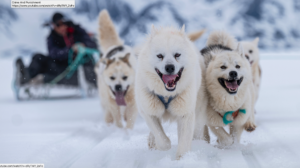
The Iditarod is the longest annual sled dog race– covering over 1,500 miles across Alaska. But there’s another impressive, long-distance sled dog journey worth considering: their slow motion race through time. A close look into canine genetics reveals sled dogs have been around and on the move for thousands of years….”
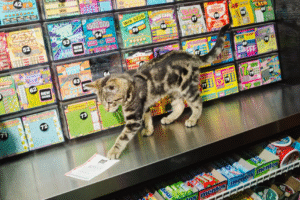
Bodegas are convenience stores, which sell everything from beer to batteries to lottery tickets. Many of them have cats, not just as companion pets, but also to take care of rodents and attract customers.
But since many of these bodegas serve food, their feline residents are, strictly speaking, illegal in New York City….”
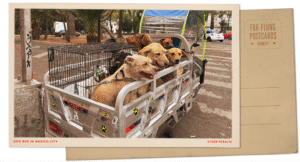
Mexico City is dog-crazy. Ladies push their poodles in strollers across the parks; one of the Chinese restaurants by our house has a full menu for your pooch — not just a bowl of whipped cream, we’re talking a chicken breast dinner! And just like there are street vendors who cater to humans, there’s one guy who runs a food truck offering doggie delectables. (His most popular item seems to be dried chicken feet)….”

Domestic cats react differently to their owner’s natural odor versus a stranger’s.
The team from Tokyo University of Agriculture in Japan investigated whether domestic cats can just use smell to distinguish between familiar and unfamiliar humans. They presented 30 domestic cats with plastic tubes containing swabs. These swabs had been rubbed under the armpit, behind the ear, and between the toes of either their owner or a human that they had never met….”

Dog Domestication:
In just a generation, we humans have abruptly changed the rules on our dogs. With urbanization increasing and space at a premium, the wild, abandoned places where children and dogs used to roam have disappeared from many American communities. Dogs have gone from working all day and sleeping outside to relaxing on the couch and sleeping in our beds. They are more a part of our families than ever—which means they share our indoor, sedentary lifestyle. Americans once wanted a dog that barked at every noise, but modern life best suits a pet that will settle nicely under the desk during remote work, politely greet guests, make friends with cats, and play nice (but not hump) in the dog park….”

Do cats make good therapy animals?:
Around 10,000 years ago, cats likely domesticated themselves when they started hanging around human settlements for better rodent-hunting opportunities. Now, there are an estimated 600 million domestic cats living around the world. Their cute toe beans, striped and spotted coats, and soft bellies still delight cat lovers everywhere….”

Dog diet:
If there’s one issue that has gripped the dog-loving community for the past few years, it’s that of cereals in dog food, and in particular in the ingredients that make up kibbles…are cereals really harmful for our dogs?”

Cat Facts:
Around 10,000 years ago, cats likely domesticated themselves when they started hanging around human settlements for better rodent-hunting opportunities. Now, there are an estimated 600 million domestic cats living around the world. Their cute toe beans, striped and spotted coats, and soft bellies still delight cat lovers everywhere….”